Septic System Replacement in Lynnfield, MA
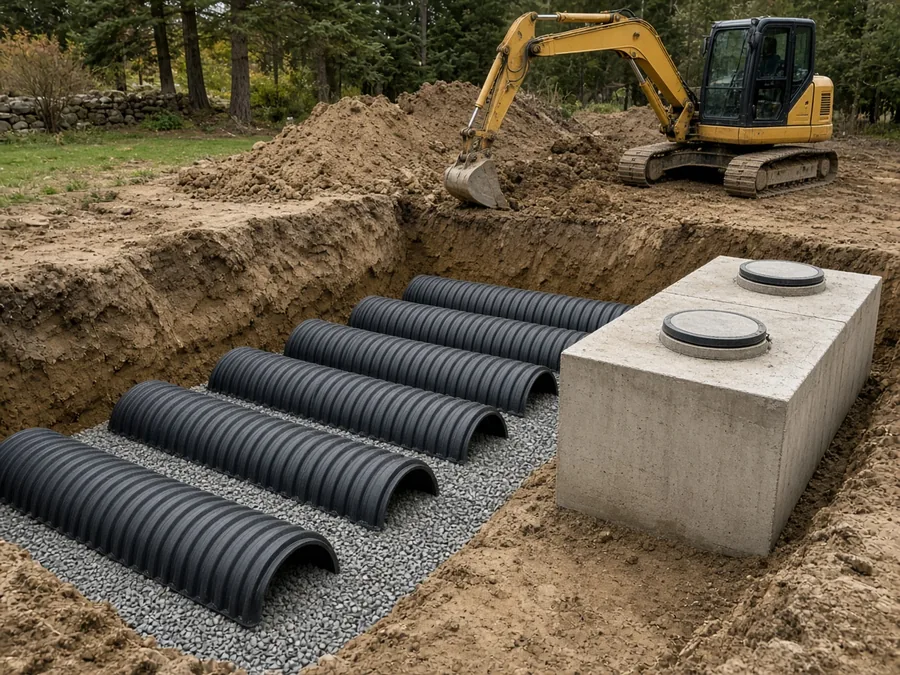
When the soil absorption system (leach field) or a cesspool fails, the fix is usually a new or upgraded system. That means site testing, an engineered design, Board of Health approval, and installation. We connect you with independent local professionals who handle replacements.
Lynnfield homes at a glance
Source: U.S. Census Bureau, American Community Survey 2020–2024 5-year estimates, via Census Reporter.
What that means for system replacement in Lynnfield
With a median build year around 1964, many Lynnfield homes still have systems installed decades ago, and older components are more likely to need attention.
Replacement starts with soil testing on your lot, and site conditions such as groundwater depth and soil type shape the design. Lynnfield's Board of Health reviews and approves the plan before work starts.
About Lynnfield
Almost every Lynnfield home relies on a private septic system rather than town sewer.
The town's own planning documents note that much of Lynnfield's soil is poorly suited to septic absorption, especially around Pillings Pond, Reedy Meadow, and upper Chestnut Street.
Signs to watch for
- A Title 5 inspection failed the system
- Sewage surfacing in the yard, especially after storms
- Repeated backups even after pumping
- The home still has a cesspool
- You are adding bedrooms and the system is too small
What the work typically involves
- Site testing. Deep-hole and percolation tests show what the soil can handle. Some towns, such as Topsfield, have a health agent witness them.
- Design and approval. A design is prepared for your lot and submitted to the local Board of Health, which must approve all upgrades.
- Installation. The installer builds the system to the approved plan.
- Final sign-off. A new or upgraded system receives a Certificate of Compliance from the local Board of Health. Keep it, and the plan, with your house records.
Helpful resources: MassDEP: Buying or selling property with a septic system · MassDEP: Caring for your septic system · Town of Lynnfield planning document (septic and soils)
Why septic problems matter
A failing septic system can back sewage into the house or yard and contaminate groundwater and wells. In Massachusetts, a Title 5 inspection is generally required before a home sale, and failed systems must be upgraded.
Sources: EPA: Septic Systems and Drinking Water · Mass.gov: Buying or Selling Property with a Septic System · EPA: How to Care for Your Septic System
System Replacement in Lynnfield: FAQ
Who approves septic repairs in Lynnfield?
The Lynnfield Board of Health. MassDEP says the local Board of Health must approve all septic upgrades and most repairs, and it is the first call if you think your system has failed.
How long does a septic replacement take in Lynnfield?
It depends on testing schedules, design, Board of Health review, weather, and the installer's schedule. Testing in many towns is weather dependent, so ask for a timeline when you get quotes.
How long do I have after a failed Title 5?
Under MassDEP rules, a failed system generally must be upgraded within 2 years, unless the Board of Health or MassDEP sets a different schedule.
Can the buyer handle the replacement?
It can be. Title 5 does not require an inspection at sale if the owner or buyer signs an enforceable agreement with the Board of Health to upgrade the system within 2 years after the transfer. Your attorney and the Board of Health can explain the details.