Septic System Replacement on the North Shore
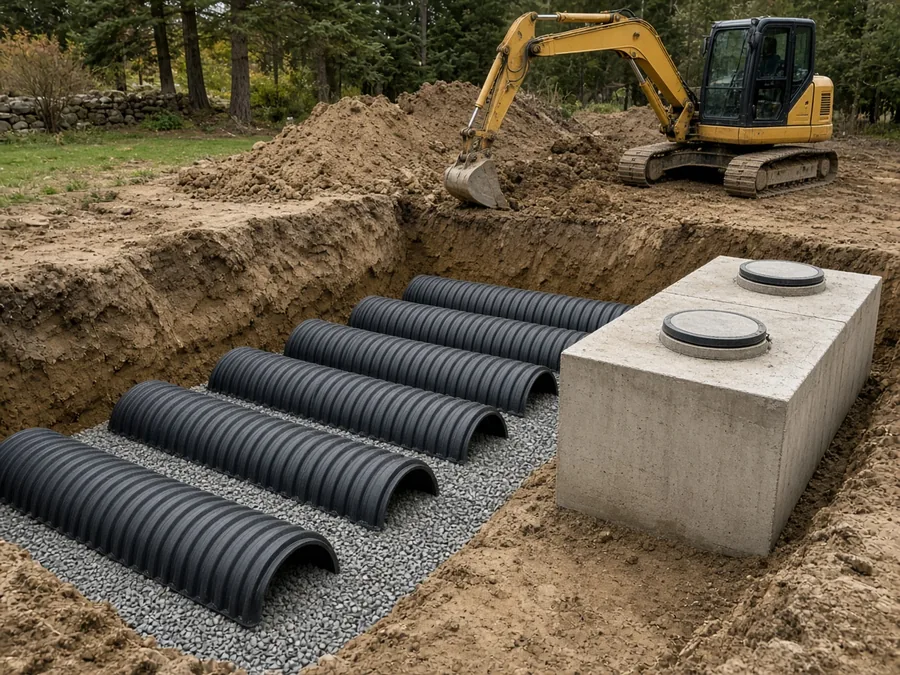
When the soil absorption system (leach field) or a cesspool fails, the fix is usually a new or upgraded system. That means site testing, an engineered design, Board of Health approval, and installation. We connect you with independent local professionals who handle replacements.
Why septic problems matter
A septic system works quietly until it does not. Catching problems early is usually simpler than dealing with a failure.
A failing system can back up into the home
When a drainfield is overloaded or clogged, it can flood, causing sewage to surface in the yard or back up into the house.(EPA: Septic Systems and Drinking Water)
It can contaminate wells and groundwater
Wastewater contains harmful bacteria, viruses, and nutrients, and a poorly maintained system can let it reach groundwater and drinking water wells.(EPA: Septic Systems and Drinking Water)
Title 5 affects selling a home
In Massachusetts, a septic system generally must be inspected by a MassDEP-approved inspector within two years before a sale. If it fails, it has to be upgraded, typically within two years, and owners must fix a failed system even without a sale.(Mass.gov: Buying or Selling Property with a Septic System)
Routine maintenance prevents most trouble
The EPA recommends having a system inspected by a professional at least every three years and pumping the tank every three to five years for a typical household.(EPA: How to Care for Your Septic System)
Signs you may need help
- A Title 5 inspection failed the system
- Sewage surfacing in the yard, especially after storms
- Repeated backups even after pumping
- The home still has a cesspool
- You are adding bedrooms and the system is too small
What the work typically involves
- Site testing. Deep-hole and percolation tests show what the soil can handle. Some towns, such as Topsfield, have a health agent witness them.
- Design and approval. A design is prepared for your lot and submitted to the local Board of Health, which must approve all upgrades.
- Installation. The installer builds the system to the approved plan.
- Final sign-off. A new or upgraded system receives a Certificate of Compliance from the local Board of Health. Keep it, and the plan, with your house records.
Every job is different. The pro you speak with will explain their own approach and pricing. North Shore Septic Pros does not perform, supervise, or guarantee any work.
Further reading: MassDEP: Buying or selling property with a septic system · MassDEP: Caring for your septic system · Mass.gov: Septic system repair tax credit
Frequently asked questions
How long do I have after a failed Title 5?
Under MassDEP rules, a failed system generally must be upgraded within 2 years, unless the Board of Health or MassDEP sets a different schedule.
Can the buyer handle the replacement?
It can be. Title 5 does not require an inspection at sale if the owner or buyer signs an enforceable agreement with the Board of Health to upgrade the system within 2 years after the transfer. Your attorney and the Board of Health can explain the details.
Is there a tax credit?
Yes. The Massachusetts septic tax credit covers 60% of qualifying costs, up to $18,000, for an owner-occupied primary residence, spread over up to 5 years.
Do I need a Title 5 inspection to sell my house?
Generally, yes. Mass.gov says a septic system must be inspected within two years before a sale, or up to six months after if weather prevents an earlier inspection. An inspection can stay valid for three years if the system is pumped every year. Only MassDEP-approved inspectors can perform it.
What happens if my septic system fails Title 5?
Under Massachusetts rules, a failed system must be repaired or upgraded, generally within two years. Owners are responsible for fixing a failed system even if they are not selling. Your local board of health oversees the process.
How often should a septic tank be pumped?
The EPA says most household septic tanks should be pumped every three to five years and inspected by a professional at least every three years. Your usage and tank size can change that.